ScienceScience · Simple Wearable Report · Clinician review
A doctor’s honest ring: sleep, illness, and the morning afterLa bague honnête d'un médecin : sommeil, maladie et le lendemain matin
Simple Wearable Report published a clinician-toned review that spends time on sleep tracking and the promise — and limits — of illness detection.Simple Wearable Report a publié une revue au ton clinicien qui s'attarde sur le suivi du sommeil et la promesse — et les limites — de la détection de maladie.
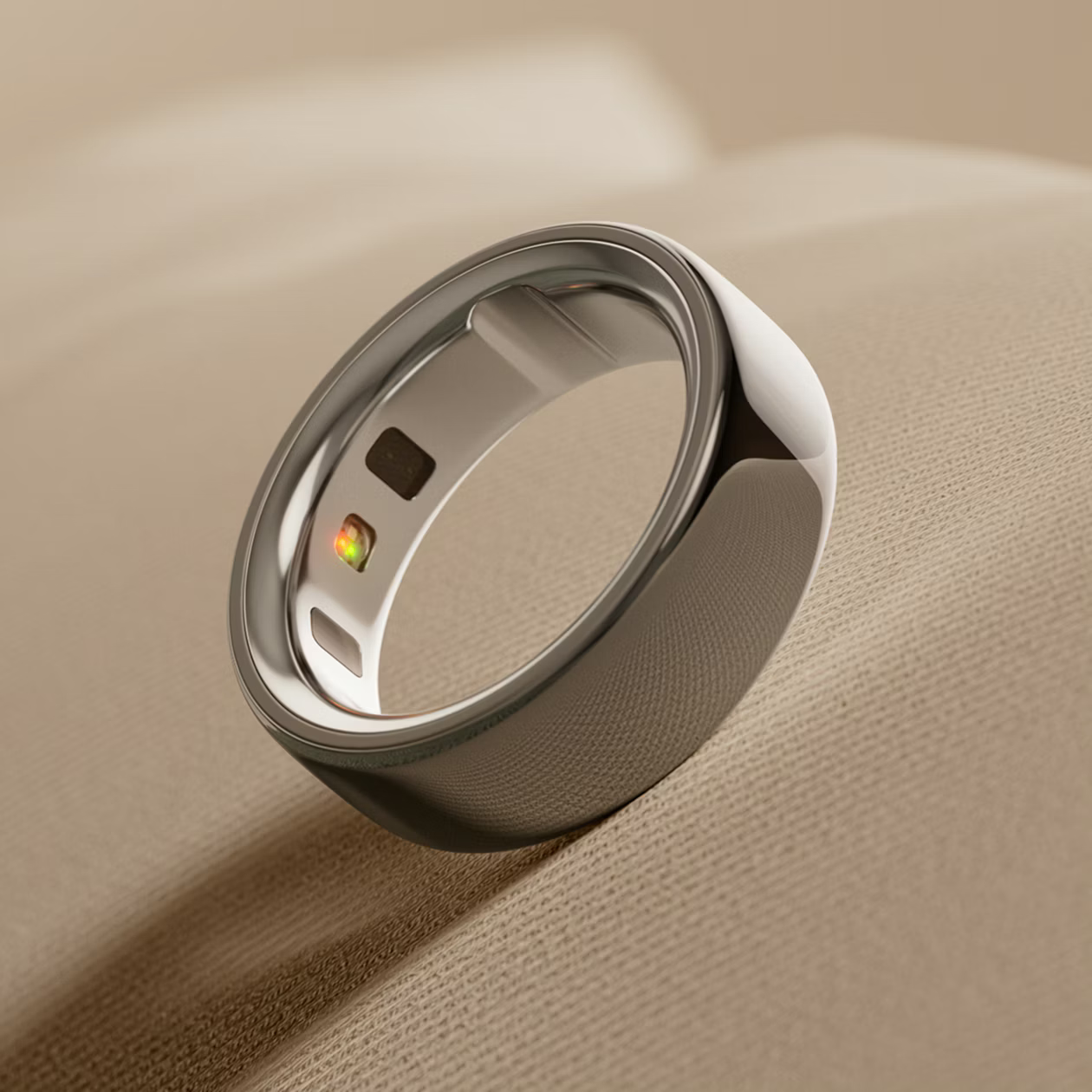
The “doctor reviews a wearable” genre is now its own beat. Simple Wearable Report’s Oura post is explicit in the URL: sleep tracking and illness detection. Those are the two claims that make physicians lean in, because they sound adjacent to medicine even when the device remains a wellness product.Le genre « un médecin passe en revue un wearable » est désormais un beat à part entière. Le billet Oura de Simple Wearable Report est explicite dans l'URL : suivi du sommeil et détection de maladie. Ce sont les deux allégations qui font pencher les médecins, parce qu'elles sonnent proches de la médecine même quand l'appareil reste un produit bien-être.
On sleep, clinician-authors usually praise the fact that patients will wear a ring for a hundred nights and will not wear a PSG montage. Continuity beats perfection if the question is “did this new medication or this new shift pattern wreck sleep.” The post’s honest register — promised in the title — typically means admitting nights when the staging looks wrong, or when a restless partner or a sick child makes the score look like the wearer’s fault.Sur le sommeil, les auteurs cliniciens louent en général le fait que les patients porteront une bague cent nuits et ne porteront pas un montage PSG. La continuité bat la perfection si la question est « ce nouveau médicament ou ce nouveau rythme a-t-il sabré le sommeil ». Le registre honnête du billet — promis dans le titre — signifie en général admettre les nuits où la stadification paraît fausse, ou quand un partenaire agité ou un enfant malade fait paraître le score comme la faute du porteur.
Illness detection is a trend, not a testLa détection de maladie est une tendance, pas un test
Oura’s illness-adjacent features (temperature spikes, respiratory-rate changes, Symptom / Health Radar language) grew up in public during COVID, when the NBA and various studies asked whether wearables could notice infection early. A doctor writing in 2025–2026 will usually say: sometimes the ring is a day or two early; sometimes it cries wolf after alcohol, travel, or hard training; it is not a PCR.Les fonctions proches de la maladie d'Oura (pics de température, changements de fréquence respiratoire, langage Symptom / Health Radar) ont grandi en public pendant le COVID, quand la NBA et diverses études ont demandé si les wearables pouvaient remarquer une infection tôt. Un médecin écrivant en 2025–2026 dira en général : parfois la bague a un jour ou deux d'avance ; parfois elle crie au loup après l'alcool, le voyage ou un entraînement dur ; ce n'est pas un PCR.
That is still valuable patient education. People who buy a ring after a viral year often want a magic warning system. A clinician review that refuses that magic is more useful than a launch blog. The protocol and the caution are already in this brief. We file it here as a primary example of medical-tone consumer writing — not as a substitute for the Lund or PMC papers.C'est encore une éducation patient précieuse. Les gens qui achètent une bague après une année virale veulent souvent un système d'alerte magique. Une revue clinicienne qui refuse cette magie est plus utile qu'un blog de lancement. Le protocole et la mise en garde sont déjà dans cette note. Nous le classons ici comme exemple primaire d'écriture grand public au ton médical — pas comme substitut aux articles Lund ou PMC.